Why Pickup Trucks Are Becoming a Must-Have in UAE

By Anushree . 10 Feb 2026
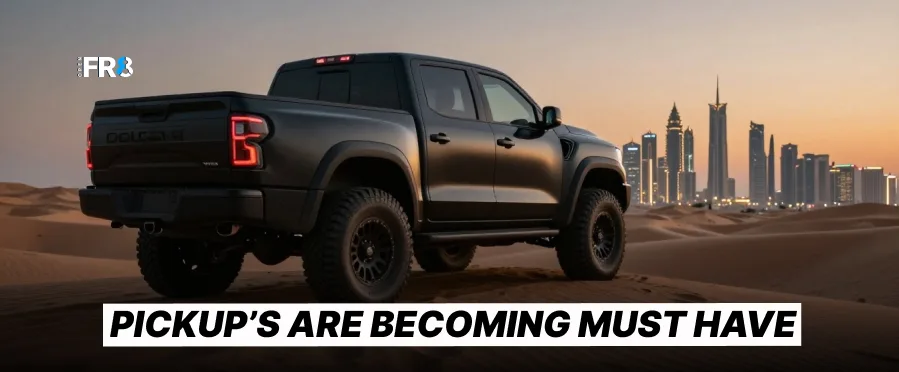
If you run a business in the UAE, you’ve probably noticed the same trucks across Dubai and Abu Dhabi: pickup trucks dominate the UAE roads. UAE pickup registrations hit record highs in 2025, reflecting roughly 12% growth compared to 2024, based on dealer registrations and importer data. This growth is largely tied to construction, logistics, and mixed personal-work usage.
What’s pushing the shift is pretty simple: construction keeps expanding, logistics is under pressure from e-commerce and same-day expectations, and your routes can jump from smooth highways to sandy access roads in one afternoon. On top of that, many fleets are being replaced sooner than before, because downtime costs more than it used to.
This guide explains the classification, leading models, and decision factors to help you choose based on information—not hype.
Pickup Truck
A pickup truck is a vehicle you use when you need both everyday drivability and the ability to carry cargo. It has a closed cabin for passengers and an open bed at the back for tools, materials, or equipment. In the UAE, you’ll see pickups used everywhere—from personal transport to maintenance, construction, and site work—because they handle heat, distance, and mixed terrain well.
By Duty Level [Payload & Capability]
You can think of duty level as how much work your pickup is built to handle. Lighter-duty pickups are fine for occasional loads, while heavier-duty ones are meant for regular hauling and tougher conditions. In the UAE, this is usually understood in practical terms rather than strict official categories.
| Type | Typical Payload | Chassis Type | Primary Use | Key Characteristics |
| Compact Pickup | 0.5–1 ton | Light-duty / Unibody | Urban, personal utility | Small size, high fuel efficiency, limited towing |
| Light-Duty Pickup | 1–3 ton | Body-on-frame | Personal + light commercial | Balanced comfort and utility, optional 4x4 |
| Mid-Size / Medium-Duty Pickup | 3–7 ton | Reinforced ladder frame | Commercial, off-road work | Strong suspension, higher towing capacity |
| Heavy-Duty Pickup | 7–10 ton | Heavy-duty boxed steel frame | Industrial, fleet use | Large engines, extreme towing |
| Ultra-Heavy / Vocational Pickup | 10+ ton | Truck-derived chassis | Specialized industrial work | PTO support, body conversions |
Note: Actual payload and capability can vary depending on GVW ratings, configuration, and registration rules.
By Cab Configuration
Cab configuration affects how many people you can carry and how much bed space you get. If you mainly move cargo, a single cab gives you more usable bed length. If you carry a team, extended or crew cabs make more sense but reduce cargo space slightly.
| Cab Type | Doors | Seating | Primary Advantage |
| Single Cab | 2 | 2–3 | Maximum payload, longer bed |
| Extended Cab | 2 + small rear | 2–5 | Balance of cargo and passengers |
| Crew Cab | 4 | 4–6 | Passenger comfort and versatility |
Note: Seating and bed dimensions can vary by manufacturer and market specification.
By Drivetrain
The drivetrain is about how power reaches the wheels. If you mostly drive on paved roads, a 4x2 setup is usually enough and more efficient. If you deal with sand, off-road access, or towing, you’ll likely prefer 4x4 for better traction and control.
| Drivetrain | Power Delivery | Best For |
| 4x2 (RWD) | Rear wheels only | On-road use, fuel efficiency |
| 4x4 / AWD | All wheels | Off-road, towing, harsh conditions |
Note: Drivetrain options and performance vary by model and regional offering.
One Vehicle, Many Jobs
Instead of running multiple vehicles, you can often cover more with one pickup. You can adapt it as your work changes, without locking yourself into a vehicle that only works in one role.
- You handle deliveries and site work with one truck
- You add racks or covers as needed
- You keep fleet costs and risk under control
Last-mile delivery is faster when you can load, unload, and park easily
Last-mile delivery has repeated stops, security checks, and tight time windows. Pickups can carry useful payload while staying easier to maneuver than larger trucks. That usually improves drops per shift.
- Faster access in busy areas and service entrances
- Good balance of payload and city usability
- Leasing and flexible fleet sizing can help during demand swings
If your driver spends less time hunting for access and more time completing stops, your cost per drop usually improves without you having to redesign your whole operation.
Construction sites, industrial zones, and rough access roads favor pickups
UAE job sites often include sand, gravel, and unfinished access tracks. Pickups handle these conditions better than many light vans, especially with the right tires and 4x4. They also keep crews and equipment together.
- Carries tools, cables, pumps, consumables, and small materials
- Better for “almost-road” conditions around sites and yards
- Helps reduce extra trips caused by using the wrong vehicle
The UAE is building and delivering more, and you need a vehicle that can keep up
When your team is juggling urgent site visits, supplier runs, and drop-offs across multiple locations, the “right vehicle” isn’t the biggest one. It’s the one that keeps moving, stays loaded safely, and doesn’t block your driver’s day with parking problems or route limits.
Recent market tracking also supports what you’re seeing on the road. For example, one UAE-focused view of commercial vehicle activity expects growth through 2031, with logistics and construction staying key drivers (see the UAE commercial vehicles market outlook). Pickup trucks sit right in the middle of that demand, because they can do real work without the operational friction of heavier trucks.
Higher resale, easier fleet refresh, and less downtime
Pickups often hold value in the UAE when maintained and not overloaded. Replacing earlier can protect service quality because older vehicles tend to bring surprise repairs. Newer models also reduce day-to-day headaches.
- Better resale when service records are clean
- Fewer breakdowns protects schedule and reputation
- Newer safety and efficiency features can reduce incidents and costs
The practical mindset is simple: buy or lease a pickup that matches your everyday workload, then replace it before it starts costing you reliability.
Consider these things before buying a pickup truck
When choosing a pickup truck in the UAE, it’s not just about looks or brand—it’s about performance, durability, and suitability for local conditions.
Drivers need a vehicle that can handle extreme heat, desert terrain, and urban roads while offering comfort and safety.
Understanding the key buying factors ensures you pick a truck that fits your daily needs and long-term investment.
Payload & Towing Capacity
- Ensure the truck can handle your typical load: light (up to 3 tons), medium (4–7 tons), or heavy (7–10 tons)
- Towing capability must match trailers, boats, or equipment you plan to haul
- Consider fleet vs personal use to determine the optimal capacity
Performance in Heat and Sand
In the UAE, cooling and traction matter more than peak power figures.
- Most leading pickup trucks maintain 40+ km/h in controlled dune tests
- Ground clearance above 220 mm is important
- Proper 4x4 systems matter more than engine size
-Practical checks before buying:
- Test 4x4 engagement
- Inspect underbody protection
- Evaluate cooling performance during long idling
Fuel & Running Costs
For UAE drivers, running costs and efficiency directly affect long-term ownership:
-
Diesel pickups remain the most cost-effective option for long-distance driving and heavy payloads
-
Total ownership costs include:
- Fuel: ~AED 0.45 per km for diesel
- Insurance: AED 3,000–5,000 per year
-
Hybrid or petrol pickups can reduce fuel bills for short city commutes, but their higher upfront cost and lower payload efficiency make them less suitable for commercial or heavy-duty use.
Safety and Comfort Features
- Crashworthiness – Ensure the pickup has 4–5 star crash ratings, critical for both family and fleet use
- Blind-Spot Monitoring & Stability Control – Essential for wide cargo beds, high traffic areas, and off-road maneuvers
- Heat-Resistant Interiors – Leather or ventilated seats improve comfort during extreme UAE summer temperatures
- Air-Conditioning Efficiency – AC must effectively cool the cabin under high ambient heat, especially when carrying multiple passengers or equipment
- Towing & Load Safety Aids – Features like trailer sway control, load-sensing brakes, and stability aids keep heavy 3–10 ton loads safe
Where a Pickup Helps — and Where It Doesn’t
When choosing a pickup, you usually look at how you’ll actually use it day to day. Some pickups suit city work and light duties, while others are better for continuous site operations or heavy hauling. Picking the right type helps you avoid overloading, unnecessary costs, and access issues.
| Pickup Type | Best-fit use | Pros | Watch-outs |
| Compact Pickup | Urban deliveries, small tools transport, personal utility with occasional work use | Very easy to maneuver, lowest fuel and ownership cost, simple operation | Limited payload and towing, not suitable for continuous commercial loading |
| Light Pickup | City work, maintenance teams, light construction support, mixed personal and business use | Good balance of size and capacity, easier parking than larger trucks, lower operating friction | Payload discipline required, cargo bed length can become a constraint |
| Medium Pickup | Regular site supply runs, mixed city–highway operations, off-road commercial tasks | Handles heavier loads with fewer trips, still flexible for varied environments | Larger turning radius, access restrictions on tight or urban sites |
| Heavy Pickup | Heavy hauling for construction, infrastructure projects, bulk material movement | High payload and towing capability, durable for demanding work cycles | Route planning needed, parking limitations, higher driver skill required |
| Ultra-Heavy / Vocational Pickup | Specialized industrial work, equipment mounting, continuous heavy-duty operations | Extreme durability, adaptable for custom bodies and equipment | Higher cost, limited route access, overkill for general transport |
Note: Best-fit use cases can vary based on configuration, workload patterns, and local operating conditions.
Conclusion
Pickup trucks are becoming a must-have in the UAE for three clear reasons: there’s more building activity, delivery pressure keeps rising, and the cost math works when one vehicle can cover many jobs.
When you choose the right capacity, a pick up truck becomes less of a purchase and more of a daily problem-solver.
Your next step is simple: List your top three routes and loads, then pick a 3 ton pickup truck, 7 ton pickup truck, or 10 ton pick up truck based on what you carry most days, not your busiest day. Compare buy vs lease, and make sure you’ve got strong service support where you actually operate.
Before purchasing commercial assets, it is vital to understand Truck Sponsorship in the UAE and who really owns the vehicle.